

Noise Control Without Compromise: How ANC Fits Into an Audiophile-grade Headset
Active Noise Cancellation (ANC) isn’t new. It’s been part of headphone design for decades, and for just as long, it’s been criticized by listeners who care about sound fidelity. Rightly so: most noise-cancelling headphones—even those from established brands famous for their noise cancellation capabilities like BOSE—tend to blunt dynamics, smear imaging, and leave you with the sense that music is playing behind a curtain.
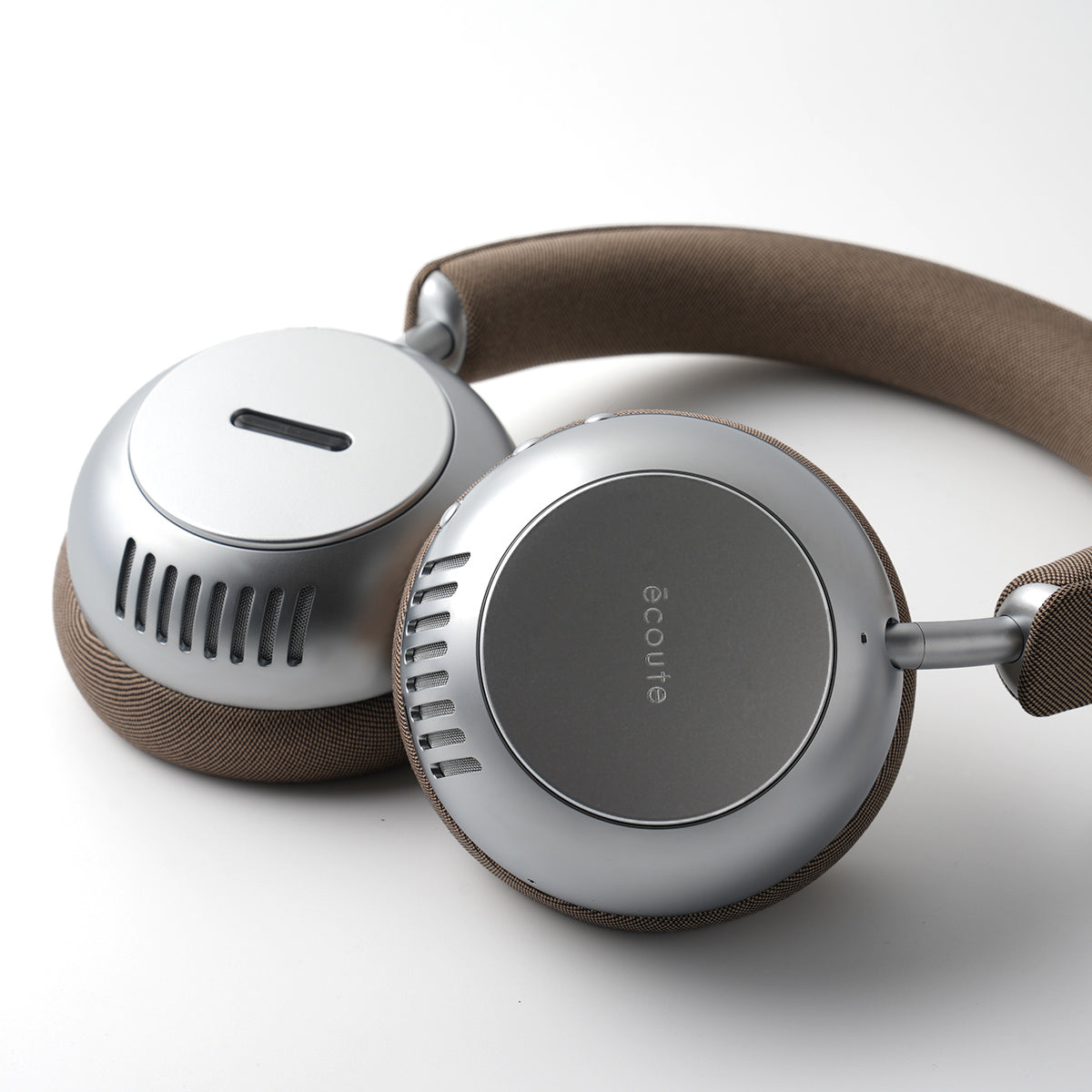
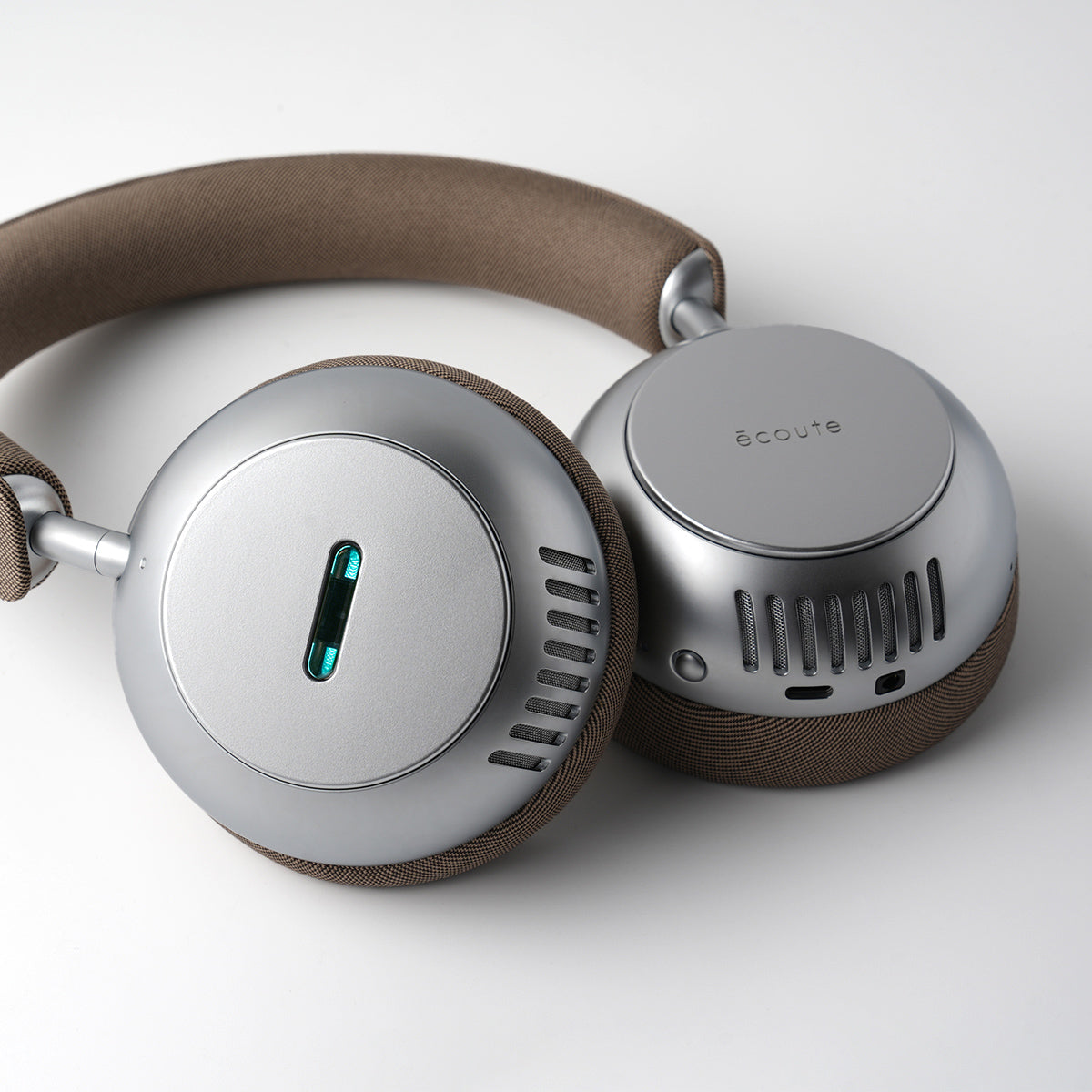
So why does a headphone like écoute designed around signal fidelity include ANC?
Because real life is noisy—and silence is rare. We didn’t dismiss noise cancellation out of a rigid belief that all processing ruins fidelity. Instead, we designed a signal-first implementation: present but transparent when you need it, and gone when you don’t. The goal is simple—reduce outside noise enough to let you hear the music without compromising what makes it sound alive.
Our approach isn’t about blocking every sound just to look good on a datasheet. It’s about reducing distractions while keeping the signal intact—so what reaches your ears still sounds natural, spacious, and true.
A Brief History of ANC
Active Noise Cancellation was first conceived in the 1950s by Dr. Lawrence J. Fogel, who developed early systems for aviation headsets to protect pilots from engine noise. Decades later, Bose refined and commercialized the concept for consumers in the late 1980s, setting the standard for modern noise-cancelling headphones. Today, ANC technology has evolved from a functional tool into an essential feature for both travelers and music lovers, balancing comfort and fidelity.
How ANC Works
At its core, Active Noise Cancellation is an application of basic wave theory. Sound travels as pressure waves through the air. When two identical waves meet—one positive, one negative—they interfere with each other. If those waves are precisely matched in timing and amplitude but inverted in phase, they cancel each other out. The peaks of one wave fill in the troughs of the other, reducing the overall pressure variation that your ear perceives as sound.
ANC exploits this principle by generating an equal and opposite sound wave—called an anti-phase signal—to counteract unwanted ambient noise. Tiny microphones positioned around the earcups continuously sample the surrounding environment. The headphone’s DSP analyzes that incoming noise, predicts its waveform, and generates an inverted version of it in real time.

When this anti-noise signal is played through the drivers, it combines with the incoming ambient noise at your ear. The two opposing waveforms interfere destructively, dramatically reducing low-frequency sounds like engine hum, HVAC rumble, or traffic noise before they ever reach your eardrum. The process happens continuously and dynamically, adjusting as the noise around you changes.
There are two main types of ANC: feedforward, which listens to noise outside the ear cup and attempts to cancel it before it enters, and feedback, which monitors what’s happening inside the ear and corrects what remains. Each has strengths and weaknesses—feedforward responds quickly to external changes, while feedback offers better correction for low-frequency and fit-dependent variations.
Hybrid ANC: The Smarter Approach
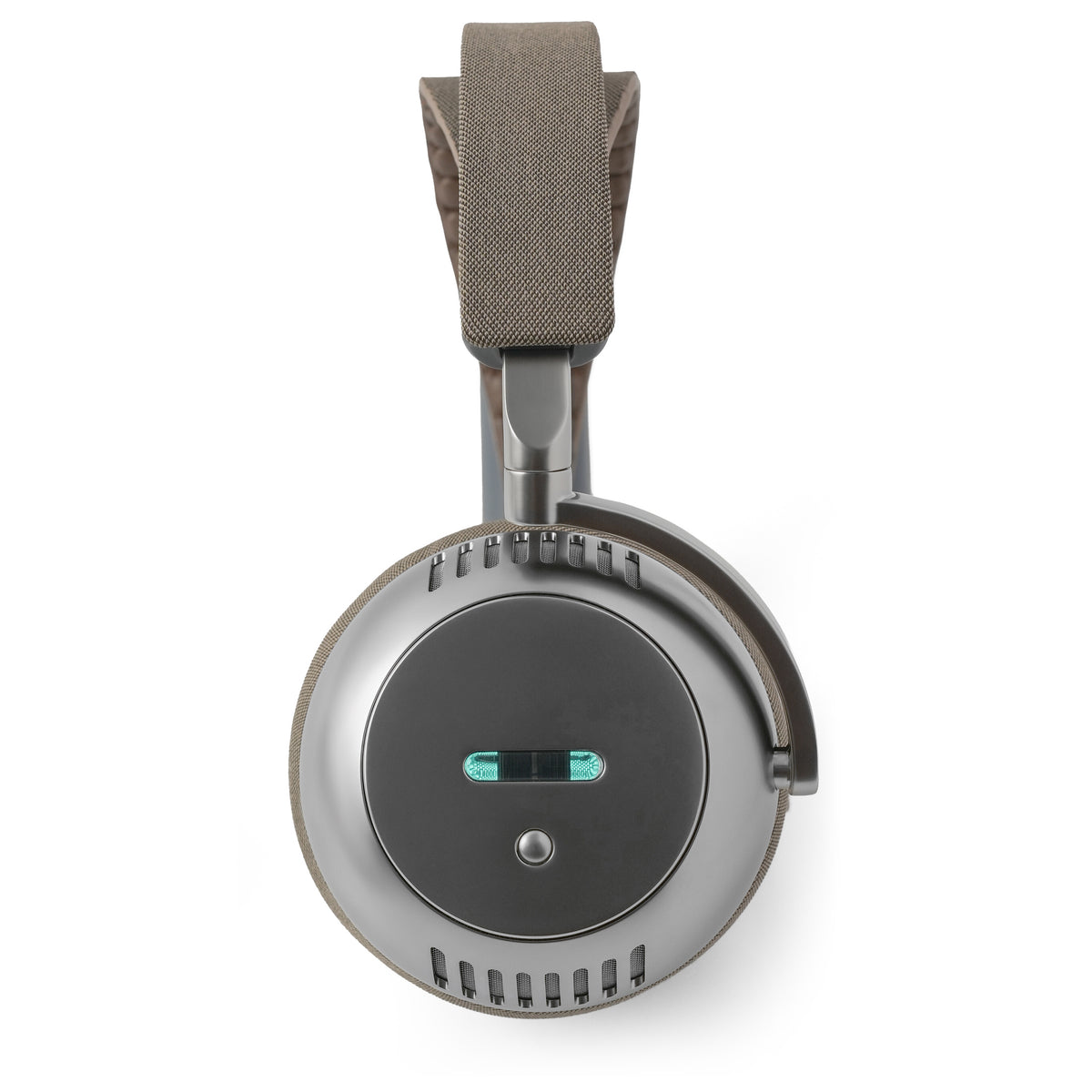
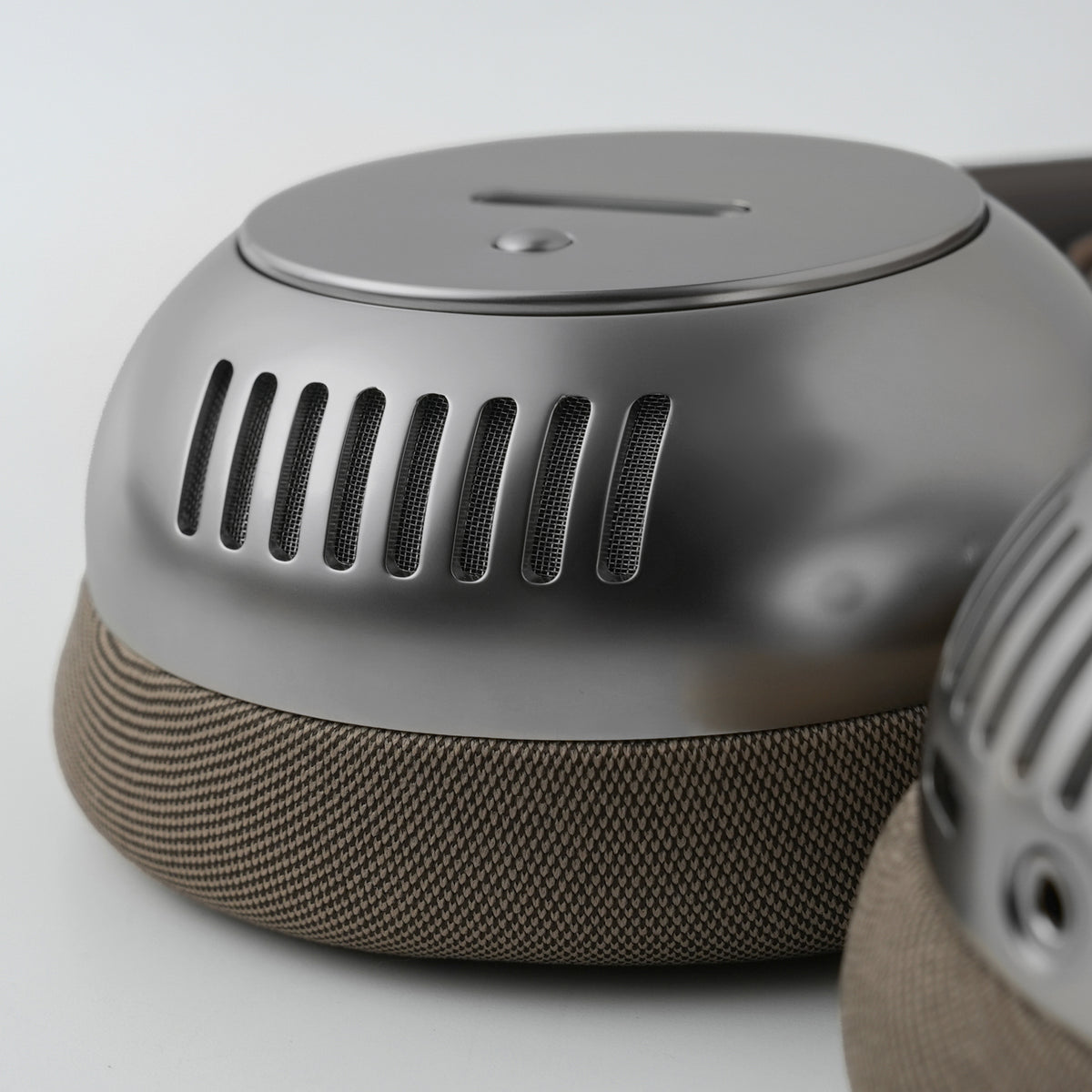
écoute uses a hybrid ANC system, combining both feedforward and feedback microphones. This dual-method approach captures external noise before it reaches your ears while also correcting any residual sound inside the ear cup.
The result is a more balanced form of active noise cancellation—less prone to the hiss, pressure, or tonal coloration that can plague single-microphone systems. Hybrid ANC adapts better to real-world environments, keeping distractions down without flattening the character of your music.
For those used to traditional ANC headphones, the difference is immediate: a quieter space without the usual trade-off in musical detail.
Where ANC Lives in the Chain
In écoute, ANC processing happens in the DSP domain, before the DAC. The DSP manages the digital housekeeping—codec decoding, custom tuning, and, if enabled, noise control. Once the digital signal leaves the DSP and enters the DAC, the hi-fi chain begins:
DAC → vacuum tube preamp → dual-mono discrete analog amplifiers
That part of the architecture never changes, whether ANC is on or off.
Why That Matters
- No analog tampering: the vacuum tube preamp and dual-mono amplifiers always receive a clean, converted analog signal.
- Integrity preserved: harmonic richness, imaging, and dimensionality are shaped by tubes and amps, not cancellation filters.
- Choice, not compromise: ANC and Transparency Mode are optional layers you can toggle, not permanent processing.
Built for the Listener, Not the Spec Sheet
For most brands, ANC is the headline feature. For écoute, it’s a courtesy. It makes the headset viable in planes, offices, and cities—but it’s never the reason the product exists.
The architecture is. The tube is. The signal path is.
Turn ANC off, and you’re left with exactly what we set out to build: a portable hi-fi system that stages music like a rack system. Turn it on, and you get the same system—just with less of the world intruding.
%20isn%E2%80%99t%20new.%20It%E2%80%99s%20been%20part%20of%20headphone%20design%20for%20decades,%20and%20for%20just%20as%20long,%20it%E2%80%99s%20been%20criticized%20by%20listeners%20who%20care%20about%20sound%20fidelity.%20Rightly%20so:%20most%20no...)
Leave a comment
This site is protected by hCaptcha and the hCaptcha Privacy Policy and Terms of Service apply.