

Why Put Tubes in Headphones?
A commenter recently asked, “Why would you need to put tubes in headphones? Is écoute just an elegant solution to a nonexistent problem?” It’s a fair question—and the inspiration for this article.
The Problem: Portable Headphones Can’t Match a Full Hi‑Fi System
If you’re like us, you hear the gap between the sound quality of your home system and what you get from standard portable headphones. There’s a reason home systems are built the way they are—with high‑resolution DACs, discrete EQ, tube preamps, and fully separate left/right amplification. Most headphones bypass all of that, relying on a single chip to handle conversion, signal processing, and amplification for both channels at once. You can get respectable sound that way, but it’s a far cry from the depth, warmth, and dimensionality of a true hi‑fi setup.
Since most of our listening happens away from the listening chair in front of our home system—during the commute, at work, or while traveling—we didn’t see a nonexistent problem; we heard a real one.
The Solution: Architecture
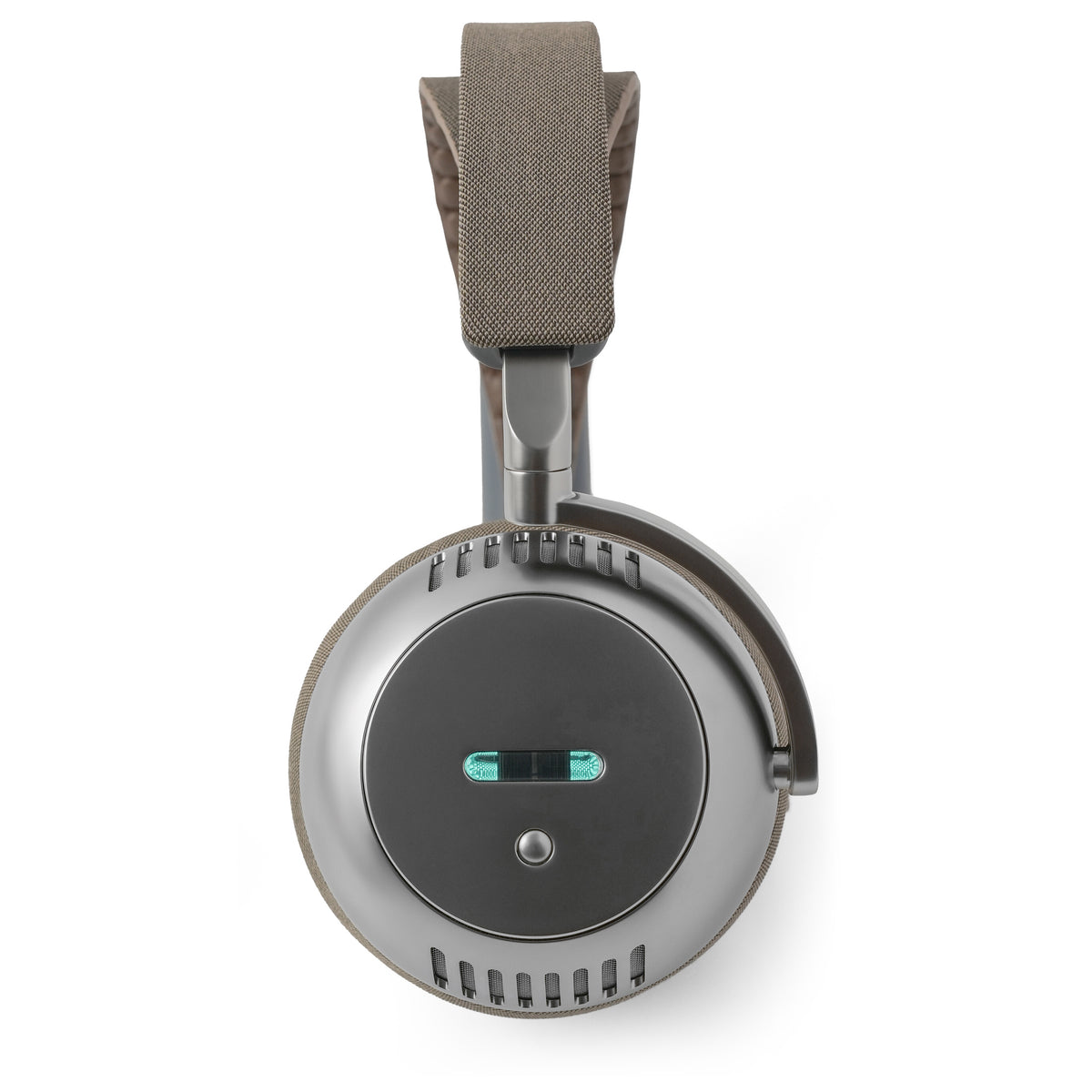
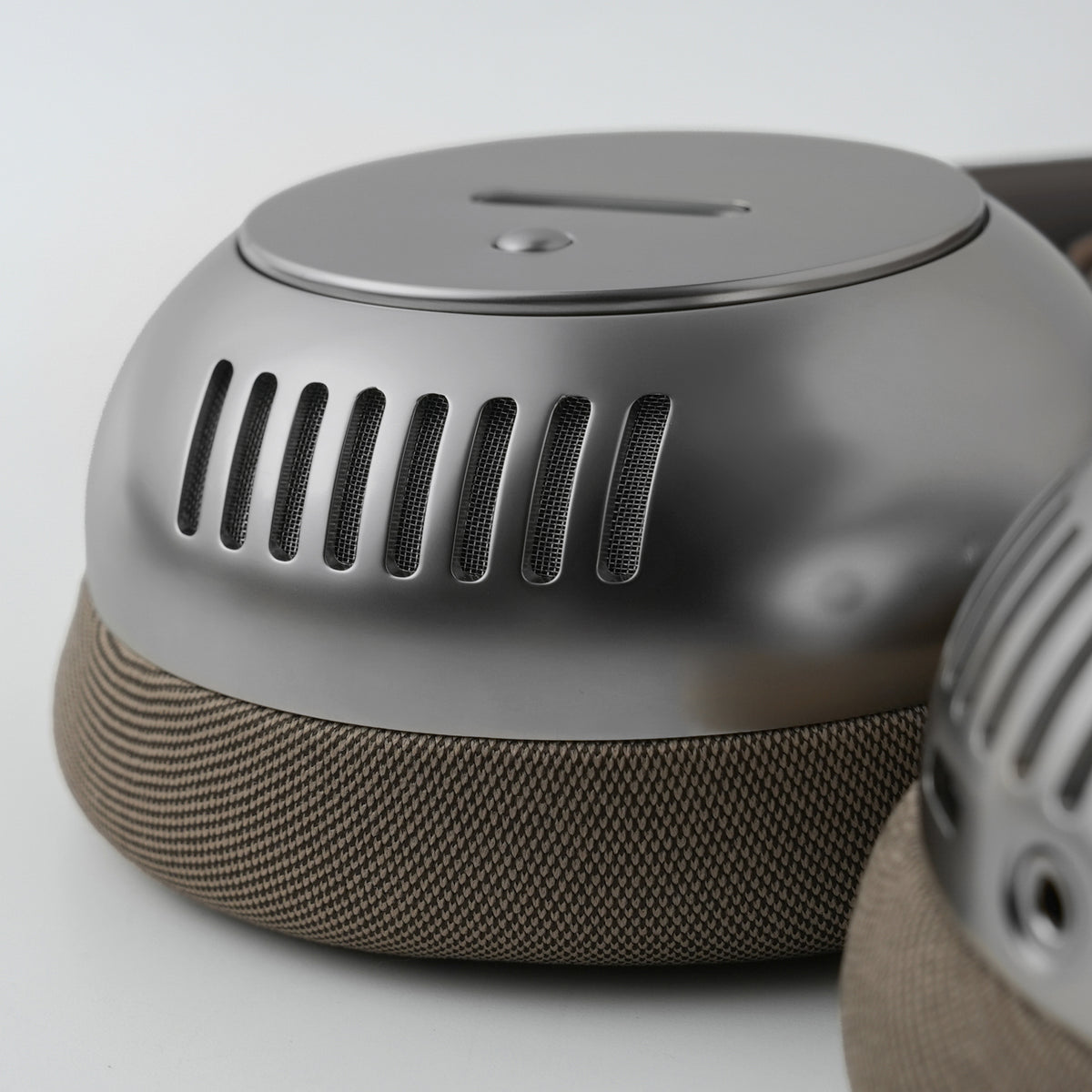
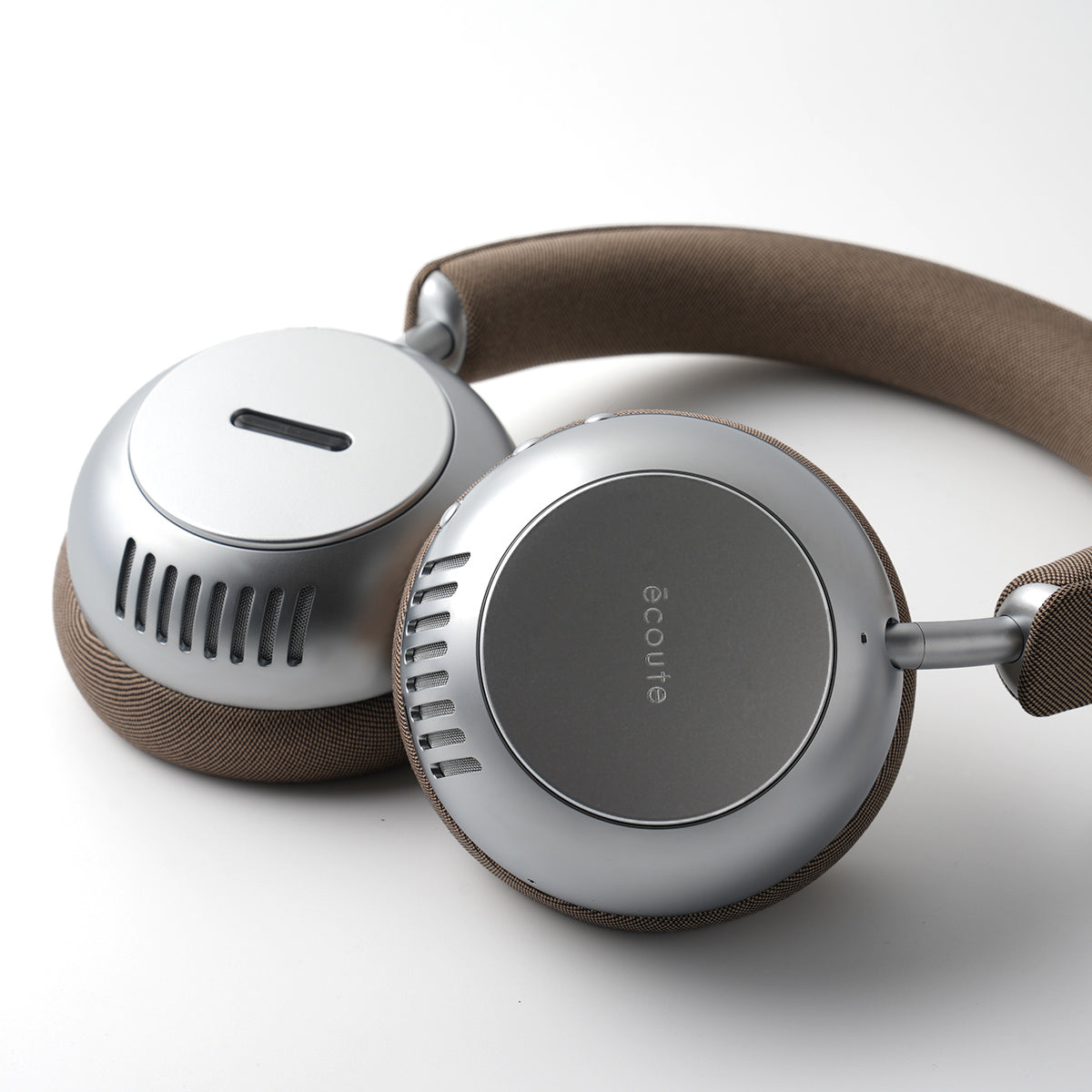
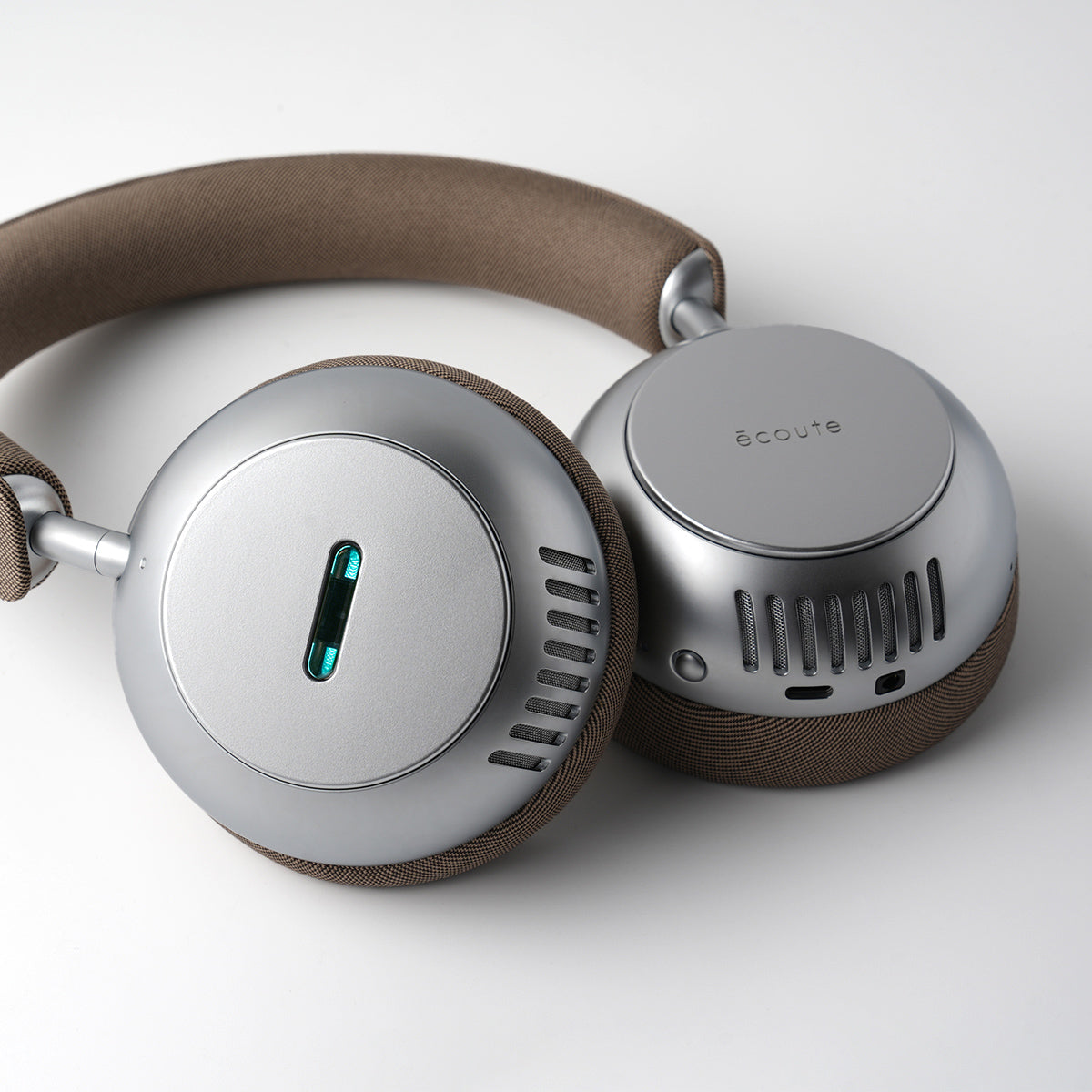
Our approach was simple: if the reason home systems sound better is their architecture, why not put that same architecture in a headset? Most headphones compress that signal chain into a single digital chip—removing the stages that give home hi‑fi systems their depth and realism. Instead of collapsing the process, we replicated it. écoute mirrors the stages of a full hi‑fi system—DAC, tube preamp, dual‑mono analog amplification, and precision tuning—all built into the headset itself.
Same structure, same outcome. Elegant? Maybe. Obvious? Definitely.
The Architecture and Why It Matters
A hi‑fi system isn’t one component—it’s a sequence. Each stage performs a unique function that shapes how the music ultimately feels. In most headphones, those stages are condensed into a single SoC (system‑on‑chip), which can technically handle everything but leaves little room for refinement.
écoute separates these stages, just like a home system:
- Custom tunability: Firmware‑level tuning allows precision EQ and tonal control without digital artifacts or compression.
- High‑resolution DAC: Converts the digital signal into an accurate, detailed analog foundation.
- Vacuum tube preamp: Adds harmonic realism by emphasizing even‑order harmonics—the same kind created by real instruments and voices—giving music warmth and dimensional presence.
- Dual‑mono analog amplifiers: Process each channel independently for true stereo separation and a soundstage that feels wide and natural.
Each of these stages contributes to what makes listening on a proper hi‑fi system so engaging. It’s not about adding effects—it’s about faithfully revealing the natural detail and spatial dimension of the original performance—the subtleties that often get lost or flattened in single‑chip systems.
Why Tubes Matter
Tubes amplify sound differently from transistors. Instead of the sharply linear behavior typical of solid‑state circuits, tubes follow a smoother, more gradual response curve that naturally introduces even‑order harmonics—the same pattern of overtones created by acoustic instruments and the human voice. The ear perceives these not as distortion but as warmth, texture, and realism. In contrast, odd‑order harmonics, more common in transistor‑based designs, can sound precise but often feel colder or more clinical.
This is why tube stages remain so revered: they recreate the harmonic signature of real sound. That subtle blend of fundamental tones and even‑order overtones gives instruments weight, presence, and air—qualities our hearing instinctively recognizes as natural. Through a tube preamp, vocals gain body, instruments occupy believable space, and the midrange takes on a lifelike, three‑dimensional realism that’s closer to hearing a performance than a playback.
A well‑designed tube stage doesn’t color music—it refines it. It restores harmonic depth, spatial coherence, and dynamic flow that make recordings feel complete and natural. That’s why tube preamps continue to hold their place in high‑end audio: they preserve the integrity and realism of recorded music, transforming playback into an experience that feels immediate, organic, and true to the original performance.
Why a Preamplifier Matters
The preamp isn’t about power—it’s about character and control. It takes the delicate output from the DAC and shapes it before it reaches the amplifiers, managing gain, impedance, and tonal balance to preserve nuance and texture.
In most modern powered headphones, signal processing and amplification are combined within a single system‑on‑chip (SoC). The DAC, DSP, and amplifier share the same silicon, converting and boosting the signal in one step. It’s compact and efficient—but that integration often sacrifices refinement. Transients, harmonic layering, and spatial cues flatten because the signal isn’t given room to develop.
A dedicated preamp restores that space. It shapes the signal with intent, revealing harmonic texture and dimensional realism that single‑stage designs tend to blur. Think of it as the interpreter between the source and the amplifier—the stage where raw information becomes music with tone, depth, and presence. Without it, you get sound. With it, you get music.
Why Dual‑Mono Matters
In most headphones, left and right channels share amplification, introducing crosstalk and phase interactions that flatten the stereo image. In a dual‑mono design, each channel is processed separately through its own DAC, preamp, and amplifier—like two monoblock amps in a home system. The result is true separation and a soundstage that feels wider, more natural, and deeply dimensional.
When you hear it, you stop thinking in terms of “left” and “right” and start hearing a unified, three‑dimensional soundstage that feels spatially real.
Not a Gimmick—A Philosophy
It’s about bringing the sound of your home hi‑fi system with you—everywhere you listen. écoute replicates that full signal path—DAC → tube preamps → dual‑mono amplifiers—within a single, portable form. It adds modern conveniences like ANC and telephony, but never at the expense of fidelity. The result is a headset built for real‑world use that still honors the signal integrity and emotional impact of true hi‑fi.
We didn’t design écoute to replace your home system. We designed it so you could take its soul with you.
The Takeaway
If you believe a full hi‑fi system sounds better than powered headphones, you already understand why we put tubes in ours. The difference isn’t marketing—it’s architecture. Recreate the chain, and you recreate the experience.

Leave a comment
This site is protected by hCaptcha and the hCaptcha Privacy Policy and Terms of Service apply.